
Most people expect a painting quote to be a simple number. Then 2 or 3 estimates come in and the range is wider than expected. One painter quotes $4,000. Another quotes $7,500. Same house, same address.
That gap is not a mystery. It comes from real variables that any honest painter should be able to explain before you sign anything. Knowing what affects exterior painting cost in the Omaha area helps you read every estimate clearly and spot the difference between a quote that is genuinely thorough and one that looks attractive today but cuts corners you will feel in a few years.
Here is what is actually driving the numbers.
Key Takeaways
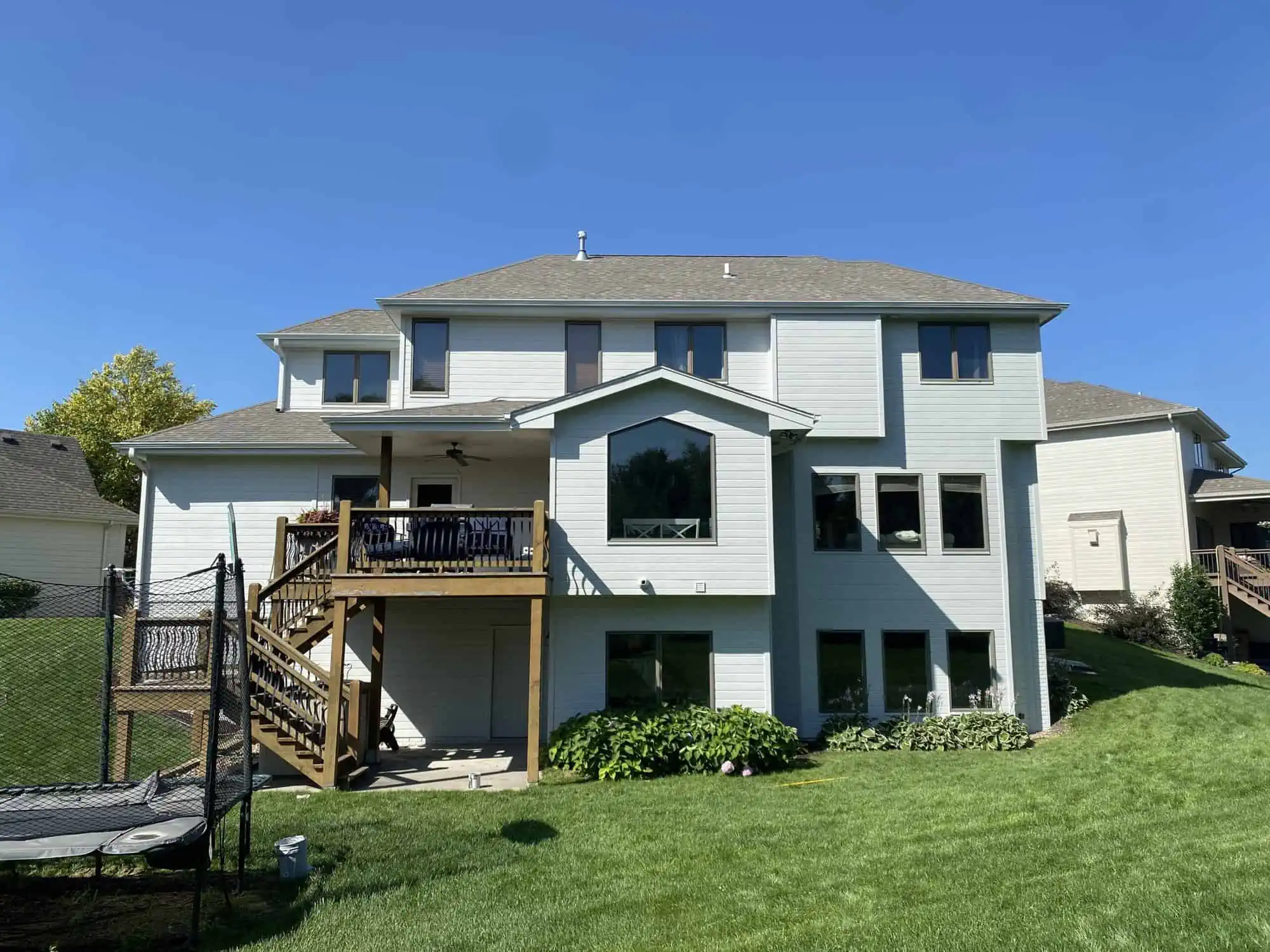
How Home Size Sets the Starting Point
Square footage gives painters a baseline for how much material is needed and how many hours the exterior painting project will take on-site. Larger homes cost more to paint. That part is straightforward.
What most homeowners do not factor in is that square footage is not the whole surface area calculation. Trim boards, window casings, fascia, soffits, shutters, and garage doors all add paintable surface that requires slower, more deliberate handwork than rolling a flat wall. A home with a lot of detailed trim can take just as long as a significantly larger home with a simpler exterior profile.
Before calling anyone for a quote, having a rough idea of your home’s exterior square footage helps you compare estimates on the same baseline.
Nebraska’s Climate and What It Does to Exterior Surfaces
This is where the Omaha market is different from warmer parts of the country, and it matters for what affects exterior painting cost here specifically.
Nebraska winters are hard on painted surfaces. Freeze-thaw cycles through late fall and early spring expand and contract the wood and siding underneath the paint film repeatedly. Over time, that movement causes cracking, peeling, and moisture intrusion behind the surface.
Homes that go too long between repaints, or that had substandard prep work done on the previous project, often show that damage clearly by the time they are ready for a new coat.
That wear accelerates prep requirements. A home in Omaha or Elkhorn, NE that has gone 8 to 10 years without an exterior repaint in this climate is almost always going to need more prep work than the same home would in a milder state. That prep time is labor cost, and it is one of the biggest reasons 2 quotes on similar homes can look very different.
What Affects Exterior Painting Cost Beyond Size: Surface Prep
Surface preparation is where most of the real price variation lives. The condition your exterior is in before painters arrive has a direct effect on how long the prep phase takes.
Peeling paint, failed caulk, mildew, and weathered wood all need attention before any new coating goes on. Skipping or rushing that step does not reduce cost. It reduces adhesion, which shortens the life of the new paint significantly.
According to the Paint Quality Institute, surface preparation is one of the strongest predictors of how long an exterior project holds up. A properly prepped surface can add several years to paint life compared to one that was rushed through.
Common prep items that add time and cost to an exterior quote include:
- Pressure washing to clear dirt, mold, mildew, and chalk buildup
- Hand scraping and sanding sections where old paint is failing
- Re-caulking around windows, doors, trim, and any penetrations
- Spot priming bare wood or areas where old paint has been removed
- Minor wood repairs on trim boards before paint goes on
Ask every painter you get a quote from exactly what is included in prep and whether repairs are priced separately. The answer tells you a lot about how complete the estimate actually is.
Paint Quality and the Real Cost Per Year
Paint selection is a direct line item in any exterior quote. But the more useful way to think about it is cost per year, not cost per gallon.
Budget exterior paints use lower resin content per gallon. They cover adequately at first but fade, chalk, and peel faster under the UV exposure and temperature swings Omaha homeowners deal with every season. Premium exterior paints are formulated with higher binder content, which produces better adhesion, more even coverage per coat, and a longer lifespan before the surface needs attention again.
Consumer Reports exterior paint testing has shown that top-rated exterior paints can outlast budget alternatives by 5 to 7 years under real-world conditions. That difference changes the math significantly when you stretch the cost over the full life of the project rather than looking at what you spend today.
Primer plays a similar role in the total project outcome. Understanding what paint primer actually does and when it is required versus optional helps you ask sharper questions when any painter leaves it out of a base quote.
Coat Count: What Changes It and Why It Matters
Most exterior projects are quoted with 2 coats of finish paint. Certain conditions push that to 3, and the added material and labor time shows up in the estimate.
Going from a dark color to a lighter one almost always requires more coats to reach full, even coverage. The same applies to bare wood sections, freshly primed areas, or heavily porous siding that absorbs the first coat more aggressively than a sound, painted surface would.
Painters should be able to tell you exactly how many coats are in the quote and the reason behind that number. Cutting a coat to bring a bid down is one of the more reliable ways a lower-priced project fails ahead of schedule.
Trim Detail and Accessibility
Trim work adds time. A home with simple, flat siding and basic trim profiles moves quickly. A home with detailed molding, layered window casings, multi-story peaks, or a wraparound porch takes longer to complete correctly.
Access is a separate factor. When painters need scaffolding, extension ladders, or lift equipment to reach upper sections of the home safely, that equipment cost is real and factors into the quote. It is not a markup. It is the actual cost of completing the work without shortcuts on sections that require height.
For a detailed look at what proper trim work involves on the exterior and why that section of any project carries its own preparation requirements, the guide on painting exterior window trim correctly is worth reading before you compare quotes.
How to Use This When Estimates Come In
Now you can look at any quote and ask the right questions. What prep is included? How many coats? What product? What is the plan for trim versus flat siding?
A lower number that leaves those questions vague is almost always cutting something. A higher number that answers everyone clearly is usually the more honest document.
For a full picture of what exterior projects actually cost in the greater Omaha area, the breakdown on exterior painting costs gives you real numbers to work from before the calls start.
At Kieser’s Painting, every estimate includes a clear breakdown of what is covered, with honest pricing and no hidden fees. What we quote is what you pay.
Reach out to our exterior house painting team and call us for a FREE estimate today. We will walk through every factor that applies to your home before anything goes on paper.