You stand in your Bennington driveway in early spring and the gutters tell the story of last year’s weather. White paint flaking off the seam edges. Dark streaks running down the fascia behind them. Rust spots on the downspout brackets where the original paint gave up two winters ago.
Choosing the best paint for gutters and fascia in eastern Nebraska comes down to three decisions that determine whether your work holds for 7 years or 3. The right product for the material, the right primer underneath, and the right weather window for application. Get all three right and a professional gutter paint job in Bennington holds 7 to 10 years; miss any of them and you are back on a ladder within 3 to 5.
This guide breaks down the best paint for gutters and fascia by material, the primer that has to go under it, the sheen choice that affects long-term appearance, and how the math compares against replacement.
Key Takeaways
- 100% acrylic latex is the right product category for aluminum, vinyl, and wood gutter and fascia in Bennington conditions.
- Steel gutters need acrylic latex with rust inhibitors plus a rust-inhibiting metal primer underneath.
- Semi-gloss is the most common sheen for gutter painting; satin is preferred on fascia for weathering reasons.
- A rust-inhibiting metal primer on metal gutters and a stain-blocking wood primer on fascia is non-negotiable for lasting results.
- Quality prep and product deliver a 7- to 10-year lifespan in eastern Nebraska; shortcuts cut that to 3 to 5 years.
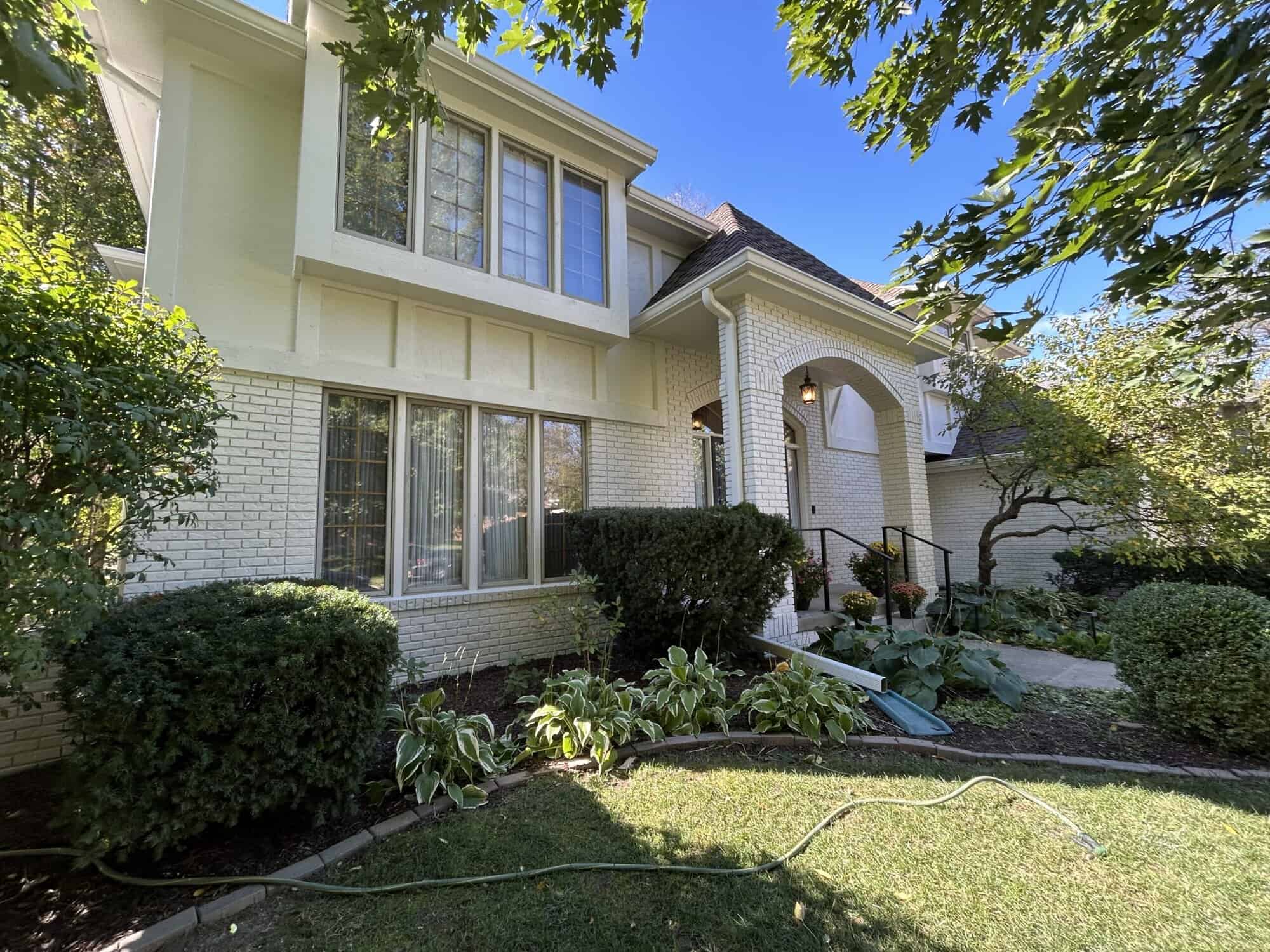
Choosing the Best Paint for Gutters and Fascia in Bennington
The product choice matters more than most homeowners realize. Three factors drive the decision.
Why Paint Choice Matters
Gutters and fascia work harder than any other painted surface on a Bennington home. They take direct exposure to sun, snow, ice dams, freeze-thaw cycling, and constant water runoff during eastern Nebraska’s storm seasons.
A paint product that holds up on siding may fail on gutters within 18 months because the conditions are entirely different.
The Climate Factor
According to NOAA eastern Nebraska climate data, Bennington experiences summer highs above 90°F, winter lows below 0°F, and roughly 30 inches of annual precipitation with significant freeze-thaw cycling. That combination drives the expansion-contraction stress that determines which paint products survive and which fail.
The right paint for gutters and fascia in this climate must remain flexible across a temperature range of 100°F+ from peak summer to peak winter.
The Real Cost of Failure
When gutter paint fails, the problem rarely stays cosmetic. Peeling paint exposes metal to corrosion and wood fascia to water intrusion that leads to rot.
The cost difference between proper paint selection upfront and full gutter or fascia replacement after early failure is often 5 to 10 times.
Paint Choices by Gutter Material
The right paint for gutters and fascia depends on what material you are starting with. Each material has specific product requirements.
Aluminum Gutters
For aluminum gutters, premium 100% acrylic latex paint is the modern industry standard. Acrylic latex bonds well to oxidized aluminum, remains flexible through temperature swings, and outperforms oil-based products on long-term color retention.
Apply over a bonding primer designed for non-ferrous metal to give the topcoat reliable adhesion to the aluminum oxide layer that forms on the surface.
Steel Gutters
Steel gutters need acrylic latex paint specifically formulated with rust inhibitors, applied over a rust-inhibiting metal primer. The primer is what stops oxidation from migrating up through the topcoat and reappearing as rust bloom on the painted surface.
Skipping the primer step on steel is the single most common reason DIY steel gutter paint jobs fail within 12 to 18 months.
Vinyl and PVC Gutters
Vinyl and PVC gutters need exterior acrylic latex paint specifically rated for plastic or vinyl. Standard exterior latex cracks and peels on vinyl because it cannot accommodate the substrate’s expansion-contraction movement.
For dark colors on south-facing vinyl, verify the product is rated for heat absorption to prevent the substrate from warping under sun exposure.
Choosing the Right Sheen
The sheen decision matters as much for appearance as it does for durability and cleanability.
Semi-Gloss for Most Gutters
Semi-gloss is the standard choice for gutter painting in Bennington. It sheds water effectively, resists dirt accumulation, and cleans easily with mild soap and a soft brush.
The higher sheen also provides better UV resistance than flat or eggshell finishes, which matters significantly during eastern Nebraska summer sun exposure.
Satin for Fascia
For fascia boards specifically, satin sheen often outperforms semi-gloss over the long term. The slightly lower sheen hides minor surface imperfections and weathering more gracefully than semi-gloss, which highlights every brush mark and substrate flaw as it ages.
Many professional painters use semi-gloss on gutters and satin on the fascia behind them for this reason.
What to Avoid
Avoid flat or matte finishes on both gutters and fascia. They trap dirt, fade faster, and hold moisture in ways that accelerate paint failure.
Avoid high-gloss finishes unless you are matching specific factory finishes. The plastic appearance and brush-mark visibility usually look worse than satin or semi-gloss at this scale.
Why Primer Is Non-Negotiable
The primer underneath the topcoat is what determines whether the paint for gutters and fascia holds for years or fails within months.
Metal Primer for Gutters
Steel gutters need a rust-inhibiting metal primer. The primer chemically converts surface rust and blocks oxidation from migrating up through the topcoat, which is the most common failure mode on steel gutter paint jobs.
For aluminum gutters, use a bonding primer formulated for non-ferrous metal. Avoid latex primers on bare aluminum because the ammonia content can react with oxidized aluminum and create gas bubbles beneath the topcoat.
Wood Primer for Fascia
Wood fascia needs a stain-blocking exterior-grade primer before topcoat goes on. The primer seals the wood, blocks tannin bleed from cedar and redwood substrates, and provides the gripping layer the topcoat needs to bond properly.
Oil-based primers outperform water-based options on high-moisture exposure areas where fascia meets roof edges and gutter brackets.
Universal Bonding Primers
For mixed-material projects covering aluminum gutters, steel brackets, and wood fascia, universal bonding primers rated for both metal and wood can simplify the job significantly.
These products typically cost slightly more per gallon but eliminate the need for two separate primers across the same project.
Surface Preparation: The Real Determining Factor
Even the best paint for gutters and fascia fails when applied over poorly prepared surfaces. The prep work is what separates a 7-year paint job from an 18-month do-over.
Cleaning
Clean each gutter section thoroughly with a mild detergent solution and a stiff brush. Years of accumulated dirt, pollen, and biofilm prevent paint adhesion at the molecular level; no primer can compensate for a dirty surface.
For mildew or mold growth, use a 1:4 bleach-to-water solution before the detergent wash. Rinse thoroughly and let dry for at least 24 hours.
Rust and Old Paint Removal
Scrape all loose, peeling paint down to a solid substrate. For rust spots on steel gutters, use a wire brush or sanding block to remove flaking rust before primer goes on.
The new paint can only bond to what is left after scraping; if you paint over compromised material, the new paint follows the old paint into failure.
Drying Time Before Painting
After cleaning, gutters and fascia need a full 24-hour drying window before primer application. Hidden moisture beneath paint film is the second most common reason gutter paint jobs fail prematurely.
Timing Your Gutter Painting Project
Weather conditions determine whether paint cures properly and bonds to the substrate or fails before it ever sets.
Temperature Window
Apply paint between 50°F and 90°F surface temperature, not air temperature. Bennington surfaces in direct summer sun routinely run 20°F above ambient, which can push gutter surfaces above 100°F even on a moderate day.
Early morning and late afternoon offer the most reliable application windows during eastern Nebraska summers.
Humidity Range
Target relative humidity below 70% for application. Above that range, water-based paint dries too slowly and oil-based paint develops adhesion problems on metal surfaces.
Eastern Nebraska summer humidity averages around 65%, which is workable but requires watching the dew point for late-day application.
Wait Times Between Coats
Follow manufacturer-specified recoat times, which typically range from 4 hours for fast-dry acrylic latex to 24 hours for oil-based products. Recoating too soon traps solvents in the lower layer and causes the paint to remain soft and prone to damage for weeks.
The painting season in Bennington runs roughly mid-April through early November.
Cost vs Replacement Math
For most Bennington homeowners with structurally sound gutters, painting beats replacement by a wide margin on cost.
Replacement Cost
Full aluminum gutter replacement on a typical Bennington home runs $2,000 to $5,000 for roughly 200 linear feet of gutter, depending on gutter style, downspout count, and accessibility. Steel and seamless aluminum installations land at the higher end of that range.
Repaint Cost
Professional gutter and fascia repaint on the same 200 linear feet typically runs $500 to $1,200 in Bennington. That is a 60% to 80% cost reduction for what most homeowners experience as a comparable visual refresh.
The DIY route runs $150 to $400 in materials but requires a full weekend of skilled work plus safe ladder access.
When Replacement Makes Sense
If gutters are sagging, pulling away from the fascia, leaking at seams, or showing visible structural damage, no paint job will fix the underlying problem. Replacement becomes the honest answer.
For gutters that are structurally sound but cosmetically tired, gutter and fascia paint delivers most of the visual improvement at a fraction of replacement cost.
When to Call Professionals vs DIY
The DIY versus professional decision on gutter and fascia painting comes down to one factor more than any other: working safely at height.
When DIY Makes Sense
DIY is reasonable when you have a single-story home with ground-accessible gutters, gutters in good condition with minimal prep needed, basic painting experience, and proper ladder safety equipment. The DIY savings on gutter painting are real, typically $300 to $700 versus professional pricing.
When to Call a Pro
Professional painting makes more sense when you have a multi-story home with second-story gutter access required, gutters needing significant rust treatment or repair, large gutter footage that scales beyond a single weekend, or any scenario where your time is worth more than the cost savings.
For broader context on what a professional exterior project costs in Bennington, see our full exterior house painting cost breakdown.
Maintenance and Lifespan
Properly applied professional gutter and fascia paint in Bennington holds 7 to 10 years. Annual cleaning with mild detergent and prompt touch-ups on small failure spots extend the lifespan further.
Your home’s gutters and fascia are the first line of defense against eastern Nebraska weather, and the difference between a 7-year paint job and a 3-year paint job comes down to product selection, prep work, and professional application. Whether you want an honest assessment of whether your gutters need a full repaint or just touch-ups, advice on the right product for your specific gutter material, or a full professional repaint that holds for 7 to 10 years, our team at Kieser’s Painting will walk you through exactly what your home needs.
Call 402-866-8260 for a FREE estimate today.