
A bathroom requires paint that can handle humidity, resist mildew, and maintain its fresh look for years. Finding the best paint for bathroom walls and ceiling is essential for both durability and style. If you’re updating an old interior painting project or starting with a blank canvas, the right paint helps protect your surfaces while adding a polished finish.
In this guide, we’ll break down everything you need to know. From choosing the right primer to selecting the ideal finish for your bathroom walls, ceiling, and trim, we’ll cover all the key points to ensure you make the best choice for your space.
Let’s explore how to get your bathroom painting project just right.
Key Takeaways:
- Primer Matters: Use a mildew-resistant primer to create a solid base for your bathroom paint and ensure better adhesion and longevity.
- Finish Selection: Semi-gloss or satin finishes are ideal for bathroom walls and ceilings due to their moisture resistance and easy cleaning.
- Ceiling Paint: For ceilings, choose semi-gloss or satin finishes to handle moisture and prevent mold buildup.
- Color Choices: Lighter colors make bathrooms feel bigger, while darker shades can add depth but may make a small space feel smaller.
- Proper Application: Prep your surfaces, apply the primer, and use a quality roller for smooth and even coverage across walls and ceilings.
Why Choosing the Right Paint for Bathroom Walls and Ceiling Matters
Bathrooms are high-humidity areas, which means the surfaces in this space face unique challenges. The best paint for bathroom walls and ceiling should be durable, moisture-resistant, and able to withstand frequent cleaning. Without the right paint, you risk peeling, mold growth, and a tired-looking bathroom in no time. The right paint will not only protect your surfaces but also elevate the look and feel of your bathroom, making it both functional and stylish.
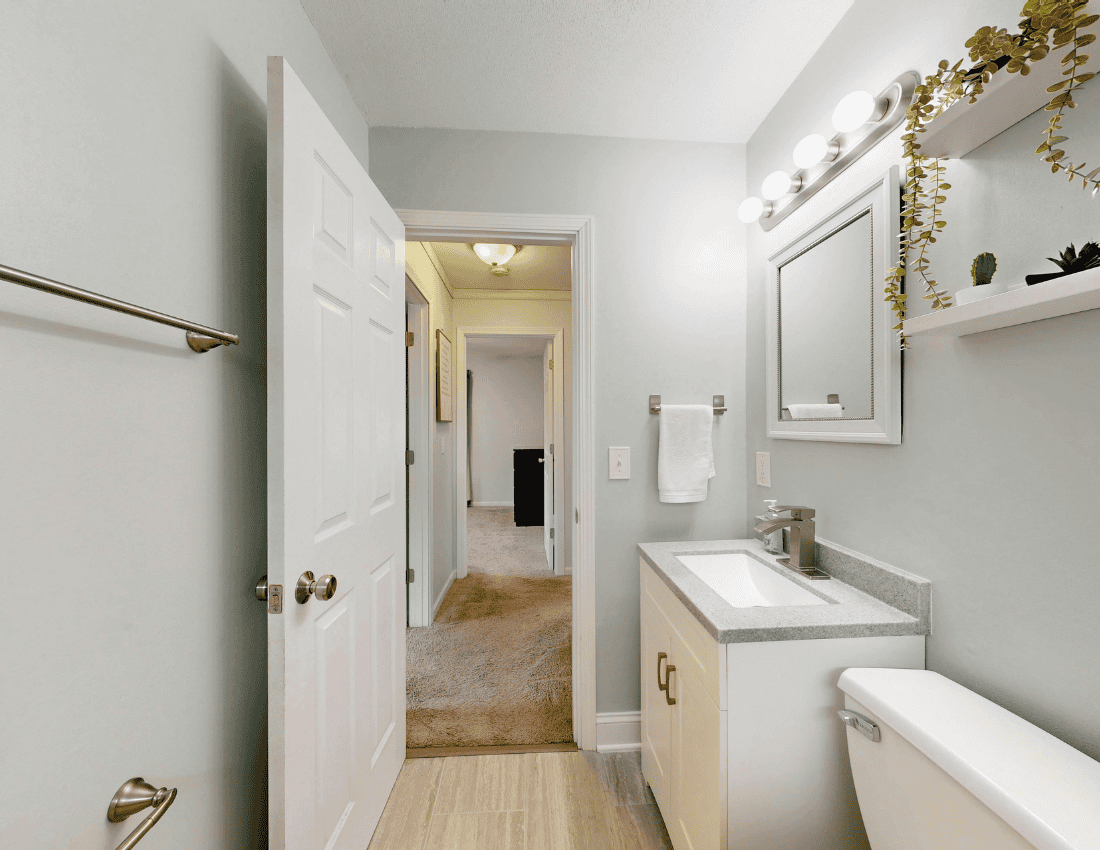
Bathroom Primer: The First Step to a Perfect Finish
Before applying any paint, a primer is essential. Priming ensures that the paint adheres properly and creates a smooth surface for the topcoat. In bathrooms, choosing the right primer is especially important because it helps seal surfaces and prevents moisture from seeping through.
Mildew-Resistant Primers for Bathrooms
When selecting a primer for your bathroom, look for one that’s mildew-resistant. These primers help block mold and mildew growth, which can be a common issue in bathrooms with poor ventilation. Mildew-resistant primers are formulated to protect against these issues by creating a barrier between the wall and the paint.
Choosing the Right Primer for Glossy Surfaces
If your bathroom has already been painted and you’re covering a glossy finish, you’ll need a primer that’s made for high-gloss surfaces. These primers are designed to bond with shiny, smooth surfaces, allowing the new paint to adhere better and last longer.
Drywall Primer: The Best Option for New Construction
For newly constructed bathrooms with fresh drywall, use a drywall primer. This type of primer is designed to seal new drywall and provide an ideal surface for paint. It’s essential for new construction because it helps the paint go on evenly and prevents the drywall from absorbing too much moisture.
Paint Finishes: Finding the Right Shine for Your Bathroom
Choosing the right paint finish is just as important as selecting the color. The finish will affect how the paint stands up to moisture, how easy it is to clean, and the overall appearance of your bathroom.
Semi-Gloss or High-Gloss Paint
Semi-gloss and high-gloss finishes are the best options for bathroom walls and ceilings because they are durable, moisture-resistant, and easy to clean. These finishes create a protective barrier that helps keep your bathroom looking fresh even after repeated exposure to water.
Pros:
- Highly moisture-resistant
- Durable and easy to clean
- Long-lasting finish
Cons:
- Reflective surface that can highlight imperfections
- Glossy finishes may not suit everyone’s aesthetic
Satin Finish: The Middle Ground
If you want something that’s not as shiny as semi-gloss or high-gloss but still offers good moisture resistance, a satin finish is a great option. Satin paint provides a soft sheen that’s more subtle than high-gloss but still durable enough for the bathroom.
Pros:
- Cleanable and resistant to moisture
- Softer sheen that works well in many bathroom designs
Cons:
- Can show imperfections on the surface
- Tough to touch up if needed
Get a detailed paint finish comparison here: Satin Paint vs. Matte Paint.
Flat and Matte Finishes: Best for Low-Moisture Areas
While flat or matte finishes may seem like a good option for bathrooms, they are not recommended for high-humidity areas. These finishes are porous and absorb moisture, which can lead to peeling, mold growth, and staining over time. They are better suited for areas with minimal moisture, like powder rooms.
Flat finishes soak up water, making them less durable in a bathroom where moisture is constantly present. They also don’t take scrubbing well, so cleaning marks and stains is much harder. It’s best to avoid these finishes unless your bathroom is a low-humidity powder room.
For more insight into the differences between paint finishes, check out our blog about Eggshell vs. Semi-Gloss Paint.
Choosing the Best Paint for Bathroom Ceilings
Many people forget about the ceiling when choosing bathroom paint, but it’s just as important as the walls. The ceiling is subjected to moisture from showers and baths, so it needs to be painted with a finish that resists mold and mildew.
Why Semi-Gloss or Satin Works Best for Ceilings
Semi-gloss or satin finish is recommended for bathroom ceilings. These finishes are durable enough to stand up to humidity and prevent mold growth. Satin works well for powder rooms, while semi-gloss is a better choice for bathrooms with a shower or tub, as it provides extra durability and moisture resistance.
How to Choose the Right Ceiling Finish Based on Humidity Levels
If your bathroom has a lot of humidity, such as from frequent showers, go for a semi-gloss finish. The extra shine and durability will help repel moisture and prevent mold growth. For less humid spaces like small powder rooms, a satin finish will do the trick.
Color Selection for Bathroom Walls and Ceiling
Now that you have your paint finish figured out, it’s time to choose a color. Bathroom colors can transform the space, making it feel larger, brighter, and more inviting. Lighter colors are often the best choice for bathrooms because they help reflect light, making the space feel more open and airy.
Light vs. Dark Colors for Small Bathrooms
If you have a small bathroom, light colors like whites, soft grays, or pale blues can make the space feel bigger. Dark colors, such as navy or charcoal, can make a room feel cozy but might make a small bathroom feel even smaller. Lighter colors are also a good choice for the ceiling, as they help open up the space.
Using a Paint Color Visualizer to Find the Perfect Shade
A paint color visualizer can be a game-changer when choosing bathroom paint. Many paint brands offer online tools that allow you to see how different colors will look on your walls before you start painting. This helps you avoid surprises and choose the perfect shade for your bathroom’s unique lighting and style.
How to Apply Paint for a Long-Lasting Finish
Proper application of bathroom paint ensures a long-lasting, professional result. Here’s a step-by-step guide to painting your bathroom walls and ceiling.
Step-by-Step Guide to Painting Your Bathroom
- Prep the Surface: Clean the walls and ceiling to remove any dirt, soap scum, or grease.
- Prime: Apply a mildew-resistant primer, allowing it to dry completely.
- Paint the Ceiling First: Use a brush for cutting in around the edges and a roller for the larger areas. This will prevent splattering on the walls.
- Paint the Walls: Once the ceiling is done, move on to the walls. Use a roller for large areas and a brush for edges.
For more details on how to handle specific finishes, read our blog on Does Paint Dry Darker Or Lighter?
Final Thoughts on the Best Paint for Bathroom Walls and Ceiling
Choosing the best paint for bathroom walls and ceiling is about selecting the right finish, primer, and application techniques to ensure your paint job stands the test of time. Whether you go for a semi-gloss, satin, or high-gloss finish, make sure to use a mildew-resistant primer and paint to protect against moisture.
How We Can Help:
- Free consultation to discuss your project and paint options
- Experienced painters with expertise in bathroom painting
- High-quality materials for long-lasting results
- Detailed preparation and application for a flawless finish
Call us at 402-866-8260 for a FREE estimate today!