
Faded paint. Peeling edges. Cracked corners. If your window trim looks like that, you’re not the only one. Many homeowners in Papillion, NE deal with the same thing after a few seasons of sun, rain, and cold.
The trim around your windows takes a lot of abuse. It faces heat in the summer, freezing air in the winter, and moisture all year round. Over time, the paint wears off and leaves the wood or metal exposed.
Painting your trim might sound like a small exterior painting project, but it makes a big difference. A clean, even coat not only improves your home’s look but also protects it from damage.
Knowing how to paint exterior window trim means doing each step right — cleaning, sanding, priming, and painting. This guide walks you through how it’s done so your windows stay sharp, smooth, and ready for whatever Nebraska weather brings.
Key Takeaways:
- Prepping the trim by cleaning, sanding, and sealing gaps helps paint last longer.
- Use primer on bare wood or metal to improve paint adhesion and prevent peeling.
- Exterior acrylic paint works best for weather resistance in Papillion’s changing climate.
- Applying two thin coats gives stronger coverage and smoother results.
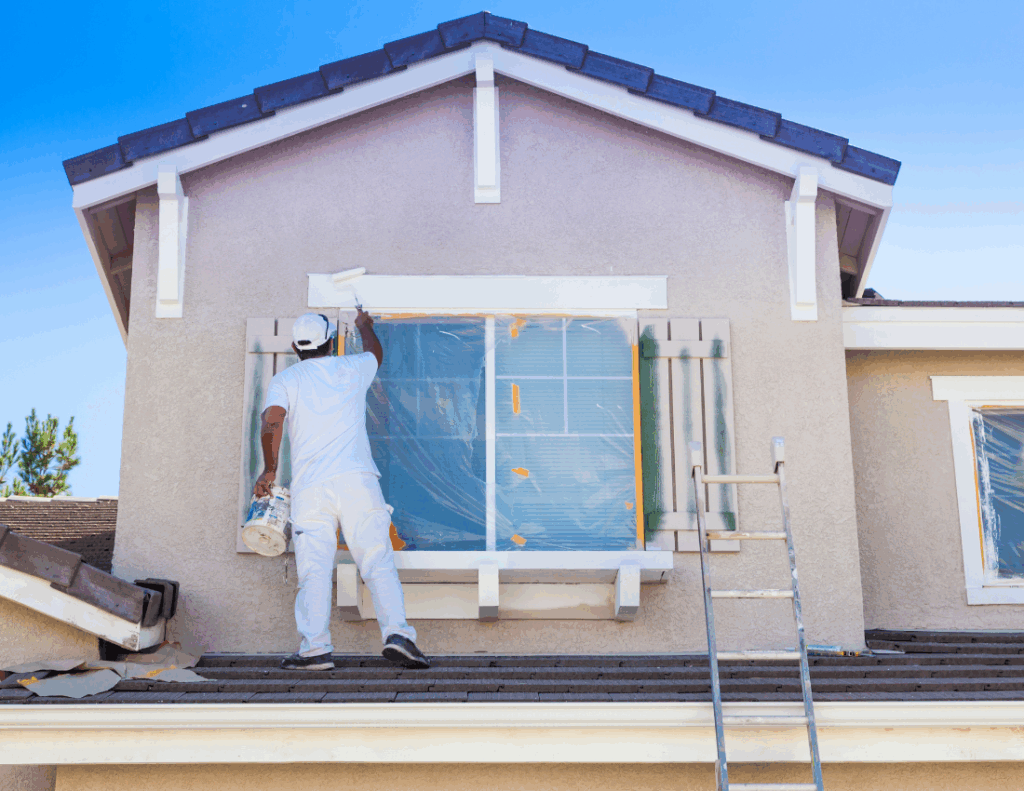
How to Paint Exterior Window Trim?
Painting your window trim might look simple, but doing it right takes a bit of planning. Each step builds on the last to make sure the paint sticks, the color looks even, and the finish lasts. The key is to go slow, stay neat, and follow the process in order.
If you’re still deciding what color to use, try paint color visualizer to see how different shades will look on your home before you start painting.
Step 1: Prepare the Trim Properly
Every lasting paint job starts with solid prep work. Skipping this step is the biggest reason paint peels or fails early.
Clean Off the Grime
Wash the trim using mild soap and water to remove dirt, dust, and mildew. If there’s green or black buildup, scrub gently and rinse it well. Let everything dry before moving on.
Scrape, Sand, and Smooth
Use a putty knife to remove loose or flaking paint. Then go over the area with sandpaper until the trim feels smooth and ready for a fresh coat. Sanding helps with adhesion and gives the new paint something to grip. Don’t forget to wipe off leftover dust before you start priming.
If the trim has cracked or uneven spots, check out our post on repair chipped paint to understand how to fix small damages before painting.
Seal Gaps with Caulk
Check around the edges of the trim and along the frame for cracks or open seams. Apply fresh caulk where needed, smoothing it out with your putty knife. This keeps moisture out and prevents future damage.
Step 2: Use a Reliable Primer
A good primer makes a big difference. It helps the paint stick firmly, protects against moisture, and covers any uneven color on the surface.
For bare wood, primer prevents swelling and peeling. For metal trim, it blocks rust and smooths the surface for better adhesion. Once applied, allow the primer to dry fully before painting — rushing this step can affect how well the acrylic paint holds up later.
Step 3: Pick the Right Paint for Nebraska Weather
When it comes to the actual paint, the quality matters more than the brand name. For homes in Papillion, NE, it’s best to use exterior acrylic paint that’s designed to resist mildew, temperature changes, and moisture. Acrylic formulas expand and contract with the weather, keeping your trim from cracking or peeling over time.
If you’re not sure which type fits your home best, our post on best exterior paint types breaks down which paints hold up longest on trim and siding.
Step 4: Gather the Right Tools
Having the right tools helps you work neatly and efficiently. Here’s a simple checklist:
- Paint and primer made for exterior use
- 2–2.5 inch brush for detail work
- Sandpaper (medium and fine grit)
- Putty knife for scraping or filling
- Caulk and rags
- Painter’s tape for edges
- Ladder for upper windows
Quality tools help you get cleaner lines and an even coat without streaks or drips.
Step 5: Apply Paint with Care
Once everything is clean, smooth, and primed, you’re ready to paint.
Start at the Top
Dip your brush lightly and tap off the extra paint. Begin at the top of the window trim and work your way down using long, even strokes. This prevents drips from ruining your finish.
Keep a Wet Edge
Work in small sections and overlap slightly while the paint is still wet. This helps avoid visible lines or uneven texture.
Apply a Second Coat
After the first coat dries completely, inspect the surface for thin spots or dull areas. Apply a second coat for better coverage and lasting color. Two coats usually provide stronger protection and a smoother finish.
If you’ve ever rushed a project or noticed streaks later, our article on painting mistakes explains why patience pays off during each drying phase.
Step 6: Finishing Touches
Once your trim looks even and rich in color, let the paint dry for at least a full day. Gently remove the painter’s tape, clean up stray drips, and stand back to admire your work. Look at the trim in natural daylight to spot areas that might need touch-ups.
If you notice any gaps or peeling near the window, that’s a sign to check the caulking or primer layer again. Proper sealing helps your paint last much longer.
How We Handle Exterior Trim Painting in Papillion, NE
Knowing how to paint exterior window trim the right way saves time, frustration, and future repairs. It’s about protecting your home, improving curb appeal, and keeping your investment in top shape.
At Kieser's Painting, our team knows how tough Nebraska’s weather can be on exterior paint. That’s why we use a process that’s focused on durability and clean results every time.
Here’s what you can expect when you work with us:
- Careful surface prep with sandpaper, primer, and caulk
- Clean, even brush application with durable paint
- Weather-resistant finish that stands up to Nebraska’s elements
Ready to give your home a cleaner, newer look? Call Kieser's Painting at 402-866-8260 today for a FREE estimate in Papillion, NE and surrounding areas.